
From flood mitigation in Lismore to safer airport access in Port Macquarie and earthquake preparedness in the Hunter, regional NSW communities are set to benefit from the latest round of the Australian Government’s Disaster Ready Fund.
The NSW Government has announced almost $81.9 million in total investment for 14 projects under Round Four of the fund, including approximately $37 million in Commonwealth funding and $44.9 million in co-contributions.
The projects will address natural hazards ranging from flooding and bushfires to extreme heat and earthquakes, with investments in critical infrastructure, emergency access and local disaster planning.
Federal Minister for Emergency Management Kristy McBain said the funding would help communities reduce the impact of future disasters.
“The Disaster Ready Fund is about getting ahead of disasters by investing in mitigation and resilience now, so communities are better protected into the future,” Minister McBain said.
Flood protection and safer transport links
Among the largest investments is a $9 million project to upgrade Lismore’s Browns Creek Pump Station and raise the city’s levee spillway by 750 millimetres.
The works include installing two additional pumps and improving debris management, with the aim of reducing above-floor flooding risk for 300 buildings in a 1 in 10-year flood.
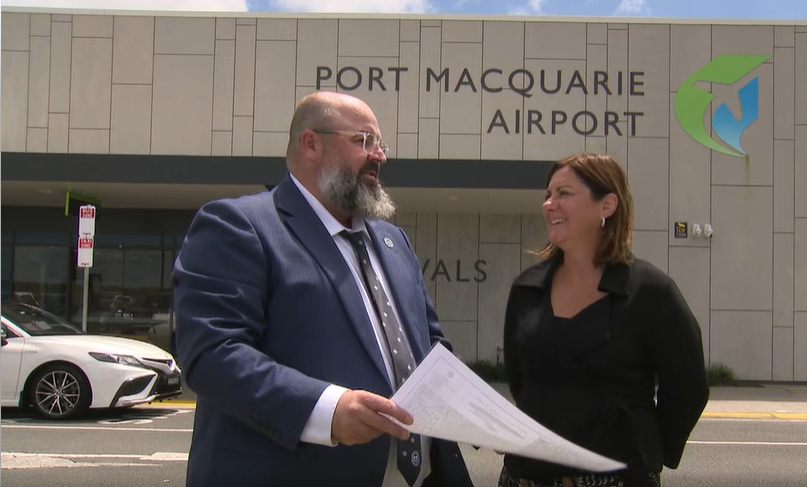
In Port Macquarie, $2.37 million will fund an alternative flood-protected access road to the airport.
Major rain events in 2023 and 2025 cut off the airport’s existing access road, preventing rescue, medical and scheduled flights from using the facility despite the airport remaining operational.
With Port Macquarie Airport selected as a NSW Air Ambulance base, maintaining reliable access during severe weather is particularly important.
Tamworth will also benefit from a $10.54 million upgrade to the Peel River CBD flood levee, including automated flood gates, culvert improvements and increased levee height.
In Dungog Shire, $2.29 million will support 10 real-time flood-monitoring stations, five solar-powered emergency information signs, community preparedness training and a shire-wide flood evacuation strategy.
Catchment restoration and community preparedness
A further $11.8 million will support a Landcare-led flood mitigation program across seven NSW catchments.
The project will restore degraded upper-catchment landscapes at more than 94 sites, using measures including revegetation, erosion control and structures designed to slow water runoff.
The program aims to reduce downstream flooding impacts while strengthening local knowledge and skills.
In the Hunter, the Earthquake Ready Hunter project will develop detailed seismic hazard maps, assess vulnerable buildings and investigate cost-effective strengthening measures.
The research will provide councils and engineers with practical information to improve infrastructure planning and emergency preparedness.
The Northern Rivers will receive more than $1.8 million for the First Nations-led Mob Ready program, which will support ongoing disaster planning, community forums and ranger network training.
National bushfire preparedness
Round Four also includes a $5.77 million Commonwealth contribution towards the next-generation Australian Fire Danger Rating System, a national initiative supported by state and territory governments.
The project will improve the accuracy of fire danger information by incorporating additional research into how fires start, spread and affect communities, alongside clearer public guidance.
Across Greater Sydney, a $2.12 million Heat Smart City Plan will strengthen heatwave preparedness through coordinated planning, community engagement and practical resources.
Investing before disasters strike
Round Four forms part of the Australian Government’s $1 billion Disaster Ready Fund, established to support risk reduction and resilience projects over five years from July 2023 to June 2028.
Up to $142.477 million in Commonwealth funding is available nationally through the latest round, with successful projects being announced progressively across states and territories.
Projects are expected to commence from mid-2027, subject to funding agreements and implementation approvals.
For regional NSW, the investments will support safer transport connections, better flood protection and more informed local planning – helping communities, businesses and essential services prepare for the next natural disaster.
The full list of successful projects is available on the National Emergency Management Agency website.


