
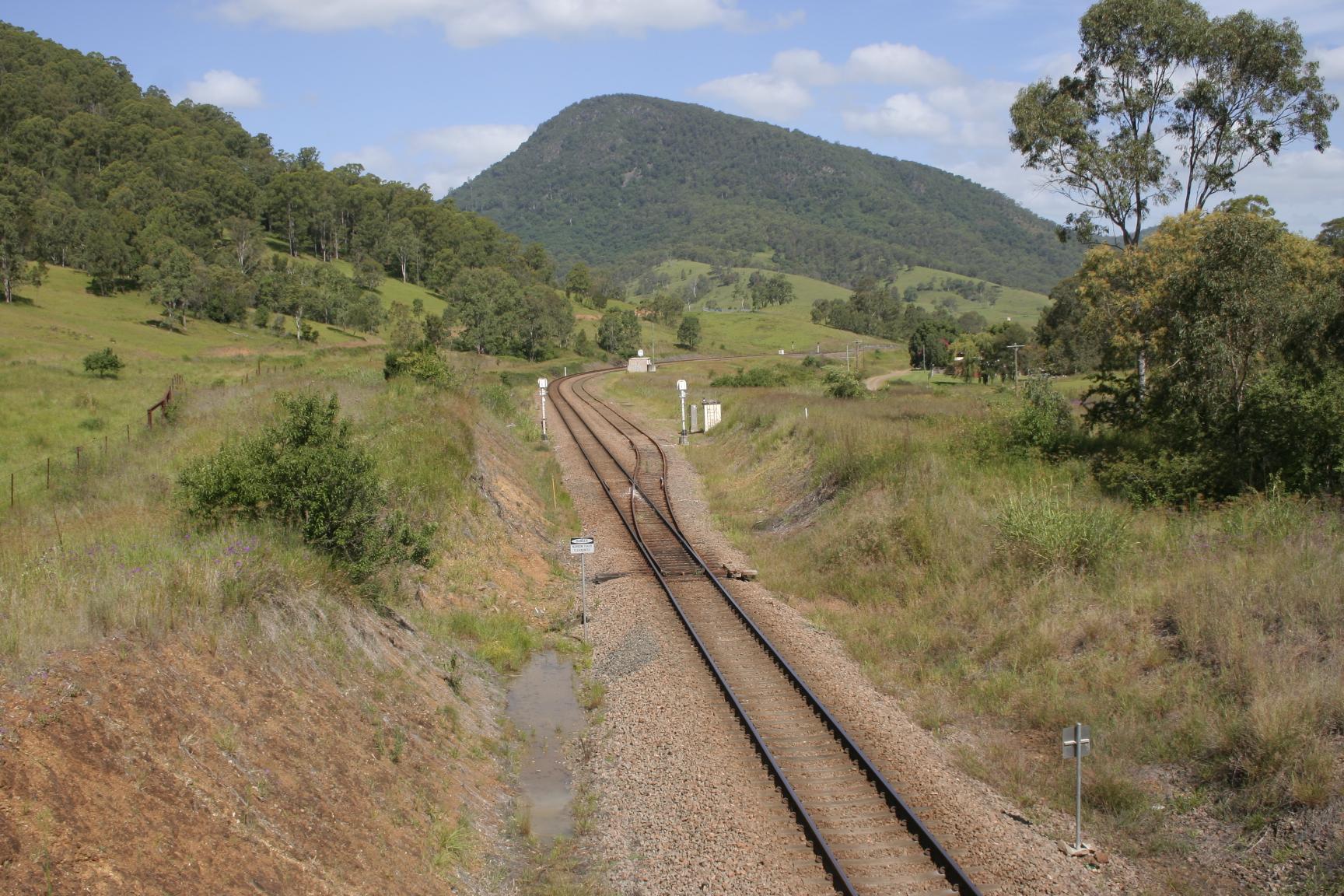
For 35 years, trains have been absent from the railway line north of Armidale. The tracks still wind through some of the New England’s most spectacular countryside, passing through small towns and villages that once thrived on the railway.
Now, those tracks could become the foundation of an entirely different regional economy.
The proposed 103-kilometre New England Rail Trail, stretching between Armidale and Glen Innes, promises to bring cyclists, walkers and horse riders into communities that have long since lost their regular rail services. Further north, in Tenterfield, an ambitious mountain biking development is preparing to welcome its first riders, with the potential to establish the town as a destination for adventure tourism.
Behind both projects is Regional Development Australia (RDA) Northern Inland, which has helped develop the business cases, economic analysis and grant applications needed to turn ambitious community proposals into investment opportunities.
But as Executive Director Nathan Axelsson explains, the real prize isn’t simply attracting visitors. It’s creating jobs, supporting young people and giving smaller communities new opportunities to prosper.

A second life for the New England railway
The New England Rail Trail is an ambitious proposal to transform approximately 100 kilometres of disused railway between Armidale and Glen Innes into a recreational corridor connecting some of the Northern Tablelands’ smaller communities.
It’s a collaboration between Armidale Regional Council and Glen Innes Severn Council, with RDA Northern Inland playing an important role in establishing the project’s economic foundations.
“We were originally engaged by both councils, around about three or four years ago to undertake business cases and grant applications and economic analysis for this project,” Mr Axelsson says.
That work helped secure grant funding, although the project remains in the planning and development phase.
The estimated $20 million conversion would create a trail for cyclists, joggers, walkers and horse riders, providing opportunities for both visitors and local residents.
According to Mr Axelsson, the economic projections are substantial: at least 50 direct and indirect jobs and approximately 20,000 additional overnight and day trips annually.
Yet the greatest impact could be felt well beyond Armidale and Glen Innes.
“Most importantly, the smaller towns between Armidale and Glen Innes,” he says, pointing to Guyra, Ben Lomond and Glencoe as communities that stand to benefit. “These really small communities that actually did have their heyday when rail was a lot more prominent.”
A steady flow of visitors would create opportunities for accommodation providers, cafes, restaurants and other tourism-related businesses, potentially bringing new commercial activity to places that have experienced decades of change.
And there is another opportunity hidden along the route.
The railway’s disused stations, some with considerable heritage appeal, could themselves become visitor attractions or find new commercial uses.
Mr Axelsson describes the stretch between Armidale and Glen Innes as some of the most scenic railway country in Australia. He also points to Ben Lomond, which he believes is home to NSW’s highest railway station.
Rather than simply replacing one form of transport with another, the trail could give the railway corridor and its surrounding communities an entirely new purpose.
Community support and the road ahead
Transforming a disused railway into a recreational trail is rarely straightforward.
While Mr Axelsson says approximately 80 per cent of respondents to recent Armidale Regional Council consultation supported the proposal, some community members favour preserving the corridor for possible future passenger or freight services.
That said, he argues that restoring the railway to modern operating standards would require an investment running into billions of dollars.
The rail trail, meanwhile, offers an alternative that could deliver economic, recreational and health benefits.
The project is not, however, ready for construction.
Both councils are working through the NSW Government’s rail trails framework, and Mr Axelsson cautions that it could be several years before construction begins.
A staged approach is being considered, potentially progressing north from Armidale and south from Glen Innes before eventually connecting the two sections.
For Mr Axelsson, the potential extends beyond conventional cycling tourism. The increasing popularity of electric bicycles could make the trail accessible to people who might otherwise find longer rides challenging, broadening its appeal across different ages and fitness levels.
It’s an opportunity to combine regional tourism with healthier, more active communities while creating a new economic purpose for infrastructure that has sat idle for decades.

Angry Bull Trails: mountain biking with a social purpose
While the New England Rail Trail works its way through the planning process, another major cycling project is taking shape further north.
In Tenterfield, Angry Bull Trails is developing approximately 170 kilometres of mountain biking trails through the region’s rugged landscapes, including state forests, national parks and other Crown land.
And this time, RDA Northern Inland’s work has already helped secure a substantial investment.
“RDA Northern Inland was engaged to undertake the business case and grant applications for that project, and was successful in obtaining round about $12 million in state government funding through two different grants,” Mr Axelsson says.
The project is expected to generate more than 50 direct and indirect jobs and approximately $7 million in visitor expenditure once operational.
Its appeal will extend across the mountain biking spectrum, with trails designed for everyone from recreational cyclists to professional riders. A pump track within Tenterfield itself will provide opportunities for younger riders.
But what makes Angry Bull Trails particularly interesting isn’t simply the scale of its infrastructure or its potential to attract visitors.
It’s the way the project connects tourism development with one of regional Australia’s persistent challenges: creating meaningful employment opportunities for young people.
More than a mountain bike park
Angry Bull Trails is approaching regional development from another direction.
Established as a not-for-profit social enterprise, the project incorporates a youth employment program, with young people involved in building and maintaining the trails.
For Mr Axelsson, this is a particularly important part of the initiative.
“It’s certainly about capacity building,” he says. “So it’s creating opportunities for young people and supporting local employment.”
The project is designed to generate employment while developing Tenterfield as a mountain biking destination. As a social enterprise, it also aims to reinvest its proceeds into the community.
This creates an economic proposition that extends beyond the immediate benefits of construction.
Trail development and maintenance provide employment opportunities, while visiting cyclists could generate additional demand for accommodation, hospitality and other local services.
And with the first trails scheduled to welcome riders, the project is moving from investment and construction towards the next test: delivering its anticipated economic and social benefits.

Attracting workers is one thing. Getting them to stay is another.
While tourism infrastructure is creating new opportunities for the Northern Inland, another RDA-led initiative is tackling an equally important issue: attracting and retaining the workers regional communities need.
Across seven local government areas in the New England North West, RDA Northern Inland is delivering the NSW Government’s The Welcome Experience program.
Its purpose is deceptively simple. Help essential workers and their families settle into regional communities and give them reasons to stay.
The results reported by Mr Axelsson suggest the program is making a substantial contribution.
After approximately two years of operation, the program has supported around 350 essential workers moving to the region. Including their partners and children, that figure exceeds 500 people.
These are people filling essential roles in sectors including healthcare, education and emergency services.
RDA Northern Inland employs four local connectors to deliver the service across its seven participating council areas.
And their work extends well beyond helping someone find a new job.
“It’s a concierge-type service,” Mr Axelsson explains, addressing the practical and social challenges people encounter when relocating from metropolitan areas or overseas.
Those challenges can include finding housing and childcare, joining sporting or community organisations and developing the social connections that make an unfamiliar town feel like home.
The program provides welcome events, local information and practical assistance to help new arrivals establish themselves.
For regional communities struggling to attract essential workers, that support can make an important difference.
As Mr Axelsson explains, the aim is to ensure workers settling in the region “feel happy and healthy about where they’ve settled” and are therefore more likely to stay.
The distinction is significant. Recruiting a doctor, teacher or emergency services worker addresses an immediate workforce need. Helping that person and their family establish lasting connections offers the prospect of a longer-term contribution to the community.
With more than 500 people supported through the program, RDA Northern Inland’s involvement demonstrates how regional development extends beyond infrastructure and investment to the people who sustain regional communities.
Different projects, one regional ambition
On the surface, a disused railway, a mountain biking network and an essential worker relocation program have little in common.
But together, they illustrate the breadth of RDA Northern Inland’s approach to regional development.
The New England Rail Trail offers the prospect of new commercial opportunities for small communities along a dormant railway corridor.
Angry Bull Trails combines adventure tourism with youth employment and a social enterprise model designed to return benefits to the local community.
And The Welcome Experience is helping address workforce shortages by supporting essential workers and their families through one of the most challenging aspects of regional relocation: establishing a new life.
RDA Northern Inland’s role differs across the three initiatives. For the cycling projects, it has provided the economic analysis, business cases and grant application expertise needed to help attract investment. For the Welcome Experience, it is delivering practical services directly to new regional residents.
What connects them is a focus on creating opportunities that extend beyond the immediate projects themselves.
For Mr Axelsson, the ambition is clear: develop new industries, strengthen local employment and support the communities that make the Northern Inland distinctive.
And if the cycling projects deliver on their promise, some of the region’s smallest towns could soon find themselves welcoming an entirely new generation of visitors.
Hear more from RDA Northern Inland Executive Director Nathan Axelsson:


