
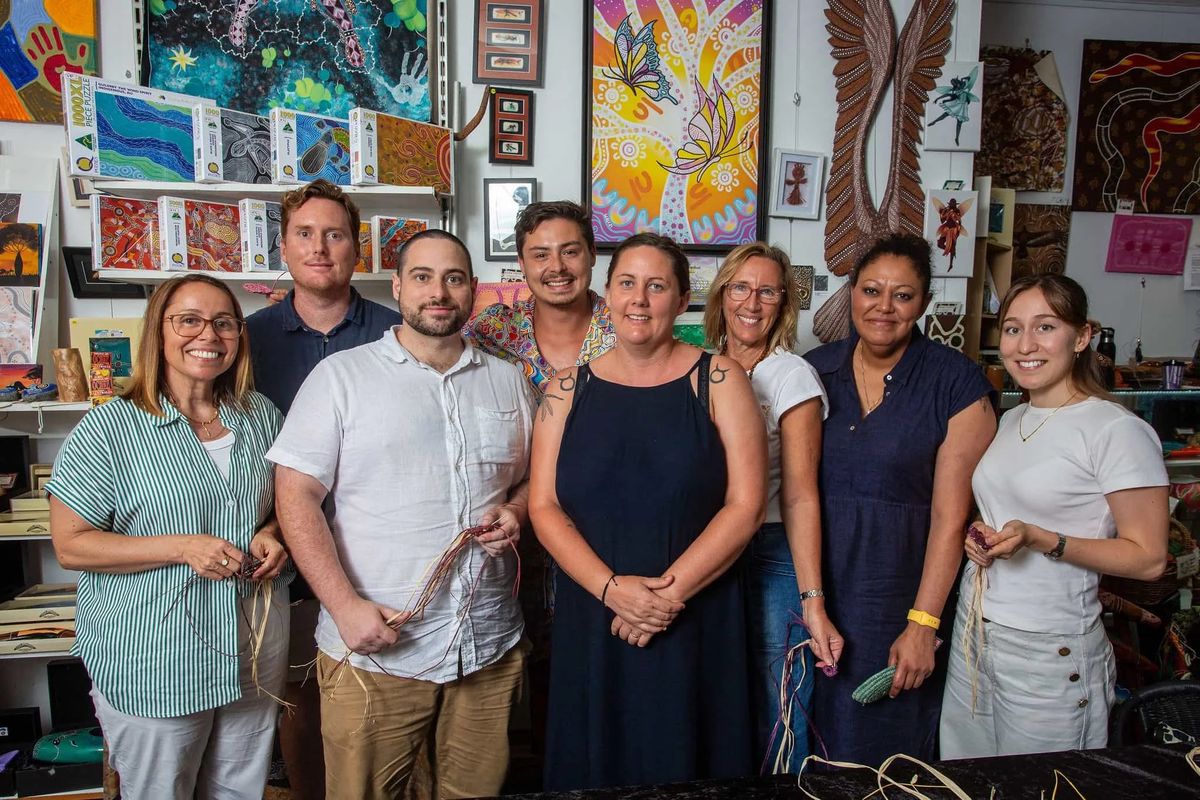
On Gadigal land, in a modest office tucked away from the corporate hustle of Sydney’s CBD, something quietly radical is unfolding. First Nations Economics, an Aboriginal-led public benevolent charity, is reimagining what prosperity can look like – not just for Australia’s First Peoples, but for Indigenous communities around the world.
Their mission is clear: To achieve social, cultural, and economic prosperity for First Peoples. But their approach? That’s where the real transformation begins.
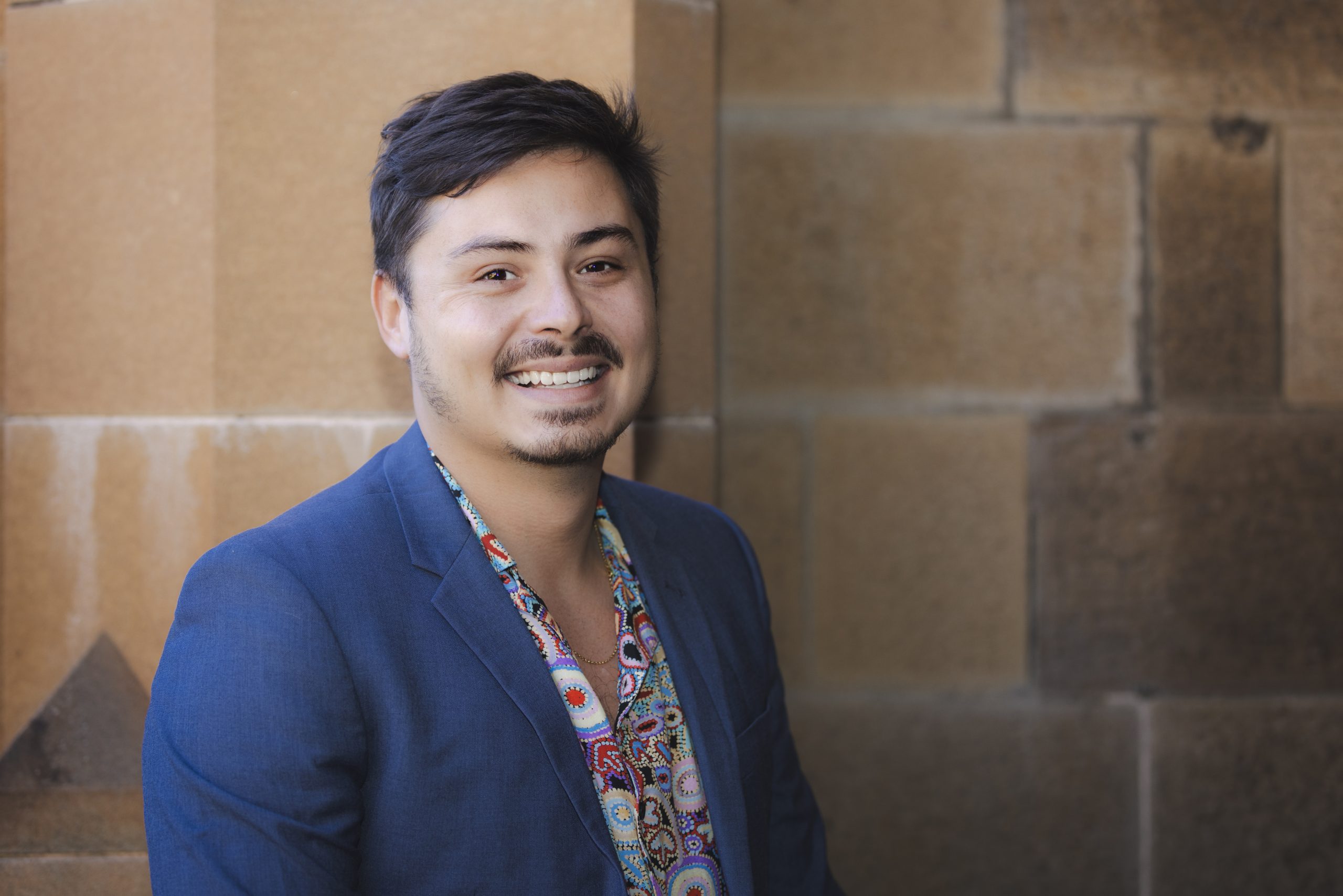
This NAIDOC Week (6-13 July 2025), that vision is being recognised on a national stage. Associate Professor Rick Macourt – a proud, queer Gumbaynggirr man, lawyer, and economic policy expert – has been nominated for the 2025 Sam Tjengala Reuben Award for Young Entrepreneur of the Year at the Supply Nation Connect Awards.
“My cheeks went a bit red,” Mr Macourt laughed, reflecting on the moment the nomination sank in. “I was a little bit chuffed.”
Community-led, by design
First Nations Economics was founded in 2023 by Mr Macourt and Garigal man Shaun Cumming. From day one, the model was intentionally different: community-led, majority Aboriginal, and majority Aboriginal female-controlled. The organisation generates income through high-level consulting services, which it then channels into scholarships, education programs, and pro bono policy advice for First Nations communities.
“Everything that we touch has to have a net positive impact on First Peoples,” Mr Macourt said. “Everything… needs to be governed and led by First Peoples.”
From the board structure to its operations, the organisation applies the principle of Free, Prior and Informed Consent in every project. Partners are expected to meet them “at a sovereign place,” as Mr Macourt puts it – a space defined by First Nations people, not imposed on them.
“There’s strength in saying no. There’s power in protecting our principles.”
Reclaiming power through economics
Mr Macourt is clear-eyed about the role that economics has historically played in dispossessing First Nations communities. But for him, reclaiming it as a tool of empowerment is a bold act of resistance.
“For too long, economics has been used as a tool against us. We’re using it now as a tool for us – and that’s a powerful shift.”
He adds that choosing excellence and integrity in the economic space isn’t about assimilation – it’s about changing the rules of engagement.
“Every time we show up and do something with integrity and excellence, we are telling a story that counters the one this country has long told about us.”
From consultancy to scholarships
For Mr Macourt, the organisation is also a response to structural barriers he encountered over 15 years in government and corporate Australia.
“There was no one to look up to,” he said. “We’d walk into rooms and be asked to take notes, not to lead.”
So they stopped waiting for a seat at the table – and built their own. First Nations Economics now provides professional services to governments and large institutions, but on their own terms. And the revenue? It flows directly back into community.
One such initiative is the Leah Armstrong Scholarship, providing two First Nations women every year with up to $20,000 annually for three years to pursue higher education.
‘I know where I come from’
Mr Macourt’s humility is not performative – it’s ancestral. During the interview, he paused as he remembered the sacrifices that enabled his journey.
“My mum raised a family of 7 children, often on her own. She had to fight so hard – she had to go without – to give us opportunities she never had.”
That sacrifice sits at the heart of his work today, especially in supporting women.
“As men – and for me as a queer man – Shaun and I know we still have privilege,” he said. “So we’re deliberate about investing that back into the women in our communities, because they’ve carried so much for us.”
The act of giving back is not charity – it’s cultural continuity.
“It’s about knowledge being passed through generations. If we don’t create the conditions for that knowledge to keep flowing – especially from our women – then we break something sacred.”
Listening as power-sharing
At the heart of First Nations Economics’ work is a deceptively simple principle: listening.
“Listening is not just about hearing words. It’s about ceding space – acknowledging that communities have their own answers, and we are there to support, not direct.”
For Mr Macourt, that means approaching every engagement with humility – and making sure the power sits where it belongs.
“We’re not there to translate the world to our mob. We’re there to translate systems back to the world our mob already knows.”
Knowledge as a sacred chain
Among Mr Macourt’s most compelling reflections is the idea that knowledge is not owned – it is carried, and passed on.
“Knowledge doesn’t belong to us – it flows through us. So if we hoard it, if we fail to pass it on, we are breaking a sacred chain.”
He sees First Nations Economics not just as a business, but as a vessel for this intergenerational flow of wisdom.
“What we’re building has to outlive us. That’s how we honour those who came before – and those who are yet to come.”
Global ambition, local roots
This ethos is now travelling. First Nations Economics recently opened its first office in Aotearoa/New Zealand and is already working with other Indigenous communities internationally.
“We’re not going in as saviours. We’re saying: here are tools and frameworks that have helped us. If they serve you, great. If not, we’ll learn from you.”
He adds that sharing what works is part of the broader responsibility to lift others.
“We can’t just hoard our wins. We need to make sure what we build is accessible to others – especially when systems elsewhere are failing them too.”
A legacy beyond one name
Mr Macourt’s nomination sits among other inspiring finalists for the Sam Tjengala Reuben Award:
- Tara Croker, a proud Wiradjuri Yinaa and founder of Yaala Sparkling, creates native-infused beverages inspired by the traditional flavours of her Ancestors.
- Steven Fordham, a proud Kamilaroi man and founder of Blackroo Community Indigenous Corporation in Muswellbrook, NSW, is creating jobs for people rebuilding their lives – including those exiting the justice system.
All three represent the future of First Nations entrepreneurship: grounded, generous, and unafraid to lead.
The winners will be announced at the Connect 2025 Gala Awards Dinner on Thursday 21 August at ICC Sydney.
But as Mr Macourt makes clear, recognition is not the goal.
“We’re trying to build something that outlives us. Something that can’t be co-opted, because it’s ours. That’s the legacy we want.”
Photo credit: First Nations Economics
Editor’s note: The Sam Tjengala Reuben Award honours the legacy of the late Aboriginal and Torres Strait Islander leader whose lifelong dedication to community continues to inspire new generations.
Article by Liz Ginis, Communications & Marketing Manager, RDA Sydney


